Our modern understanding of culinary luxury began at the court of Louis XIV in Versailles. To politically control the nobility, the king forced the most important families to reside at his court. They had specialities from their home provinces delivered to them. For the first time this created a constant availability of top-quality regional produce in a central location, thus establishing France’s role as a culinary centre. The French Revolution of 1789 accelerated this development. Many court chefs lost their positions and opened their own restaurants on the free market. The rising bourgeoisie used these establishments to publicly demonstrate their wealth. Culinary luxuries such as lobster, truffles and champagne became available for purchase to those who could afford them.
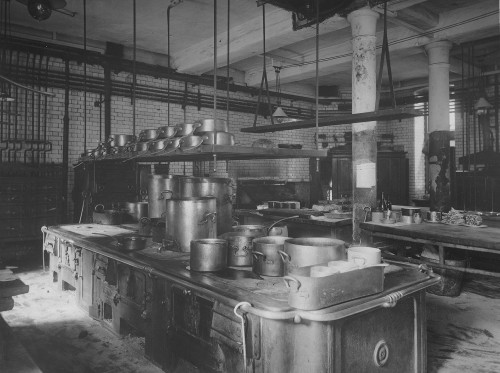
In the early 19th century, Marie-Antoine Carême brought a scientific approach to the culinary arts and systematised haute cuisine. He established four basic sauces. Through reduction, these formed the systematic foundation that made countless derivatives possible. He designed monumental, edible showpieces made from sugar and consistently emphasised the natural flavour of his ingredients. At the end of the 19th century, Auguste Escoffier fundamentally modernised this system for the era of the grand hotels. He rationalised workflows through the introduction of the “Brigade de cuisine”, or kitchen brigade, created more than 5,000 standardised recipes, improved working conditions, introduced efficient work processes and created elegant stocks.
At the same time, dining traditions underwent a fundamental change with the shift from “service à la française” (French service) to “service à la russe” (Russian service). With the French service, all dishes constituting a course were traditionally placed on the table at the same time in silver serving dishes. As a result, the food cooled down quickly. In contrast, in 1810, the Russian ambassador, Prince Kurakin, established the practice of serving hot dishes from the kitchen one after the other. Thus, the magnificent buffet display disappeared, and individual dishes became the centre of attention, with specialised porcelain and cutlery for each course.