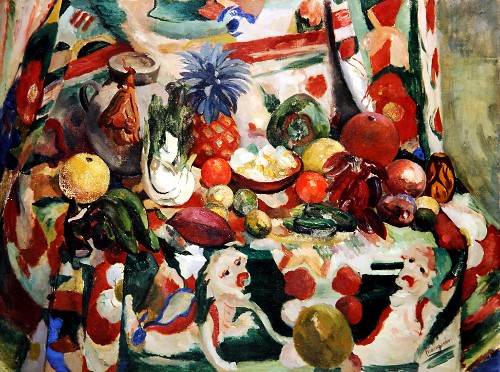
Today, sugar, coffee, chocolate, chicken, pomegranates, lemons or even grapes are everyday shopping items for many.
For a long time, however, most people only had access to local, seasonal foods. Only a small elite could afford delicious desserts, expensive fruit or even colonial goods from distant regions.
The latter arrived in port cities such as Antwerp and Amsterdam and were to be seen in the lavish still lifes of 17th-century Dutch and Flemish painters on imaginary, richly laden tables. as for example in a so-called ‘pronkstilleven’ (ostentatious still life) by Abraham Hendriksz van Beyeren and “Still Life with a Wine Glass” by Jan Davidsz de Heem.
It was only with the expansion of the colonial empires in the 19th century that these products became accessible to the wider population. Their cultivation relied heavily on what was known as plantation farming and thus also on slavery and indentured labour. New industrial developments reduced the costs for processing sugar, cocoa and other products.
And alongside the pre-existing weekly markets, consumers increasingly began to frequent colonial stores – shops for commodities produced in colonised regions under colonial rule. Such colonial stores also started to appear in Baden-Baden.
Over the course of the 19th century, coffee with sugar became a popular everyday drink among the working classes in many parts of Europe. It was consumed both at home and in coffee houses – which had been important places of social exchange since the 17th century.
It was in late 18th-century Paris that modern restaurant culture emerged. The French Revolution left many cooks devoid of their positions in aristocratic households, forcing them to look for new means of making a living.
Previously, dining out had only been possible in inns and taverns. The unemployed cooks recognised a gap in the market and opened restaurants, making fine dining accessible to a significantly wider public.